Sometimes, a simple everyday experience can lead to an idea that makes a difference. For Rupesh Sanghvi, that moment came during the COVID-19 lockdown, when an ordinary meal inspired an unusual solution to the growing problem of plastic waste.
During the lockdown, Sanghvi found himself facing a sink full of dirty utensils and no clean spoon to eat with. He decided to eat dal khichdi using his fingers and a piece of khakhra. The experience sparked an interesting thought: could food itself be used to make an alternative to disposable plastic cutlery?
With 17 years of experience in the aviation industry, Sanghvi had already witnessed the enormous amount of disposable cutlery and packaging discarded after flights. Even unused items often cannot be reused because of airline policies and safety requirements.
This experience made him think beyond conventional plastic alternatives.
Turning an Unusual Idea into a Real Product
Sanghvi began experimenting with edible spoons made from millet and different types of flour, including sorghum, corn and wheat.
However, turning the concept into a practical product was not easy.
The biggest challenge was finding the right balance. If the spoon contained too much flour, it became soggy. If it was too firm, it became difficult to bite.
Instead of giving up, he continued experimenting. After 88 unsuccessful prototypes, he finally developed a spoon that could hold food, remain firm during use and still be eaten like a biscuit.
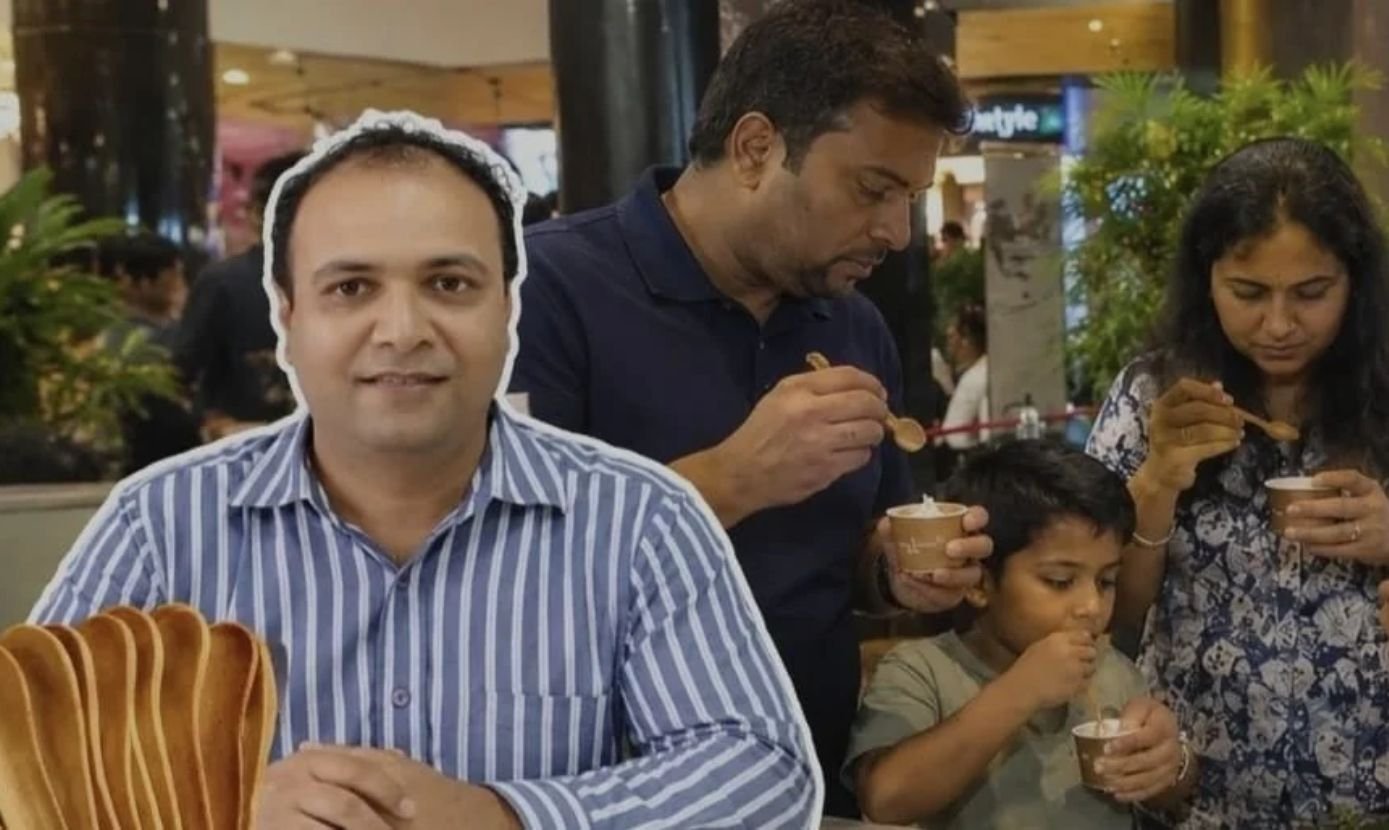
This innovation became part of Edybites, a venture focused on making edible cutlery a practical alternative to conventional disposable spoons.
Making Sustainability Practical
The idea behind Edybites is simple: instead of throwing away a disposable spoon after using it, why not make a spoon that can be eaten?
The product offers another way to rethink everyday consumption. If someone does not want to eat the spoon, it is designed to decompose naturally.
The edible spoons cost approximately ₹7–8 per piece, which makes them more expensive than conventional plastic alternatives. Therefore, the business is initially focusing on events, institutions and dessert-based applications where customers may be more willing to adopt sustainable alternatives.
The venture has already sold or distributed more than 5,100 spoons, showing early interest in the concept.
A Bigger Lesson Behind the Innovation
Rupesh Sanghvi’s journey highlights an important lesson for entrepreneurs: sustainability is not just about asking people to stop using harmful products. It is also about creating alternatives that people genuinely want to use.
His journey from a simple kitchen observation to 88 experiments and a functional edible product demonstrates how curiosity, persistence and practical thinking can lead to meaningful innovation.
The next time someone picks up a spoon to enjoy a meal, Edybites offers an interesting possibility: what if the spoon itself could become part of the meal?
At India’s Story, we celebrate entrepreneurs who turn everyday problems into meaningful ideas and create solutions that can make a difference.