
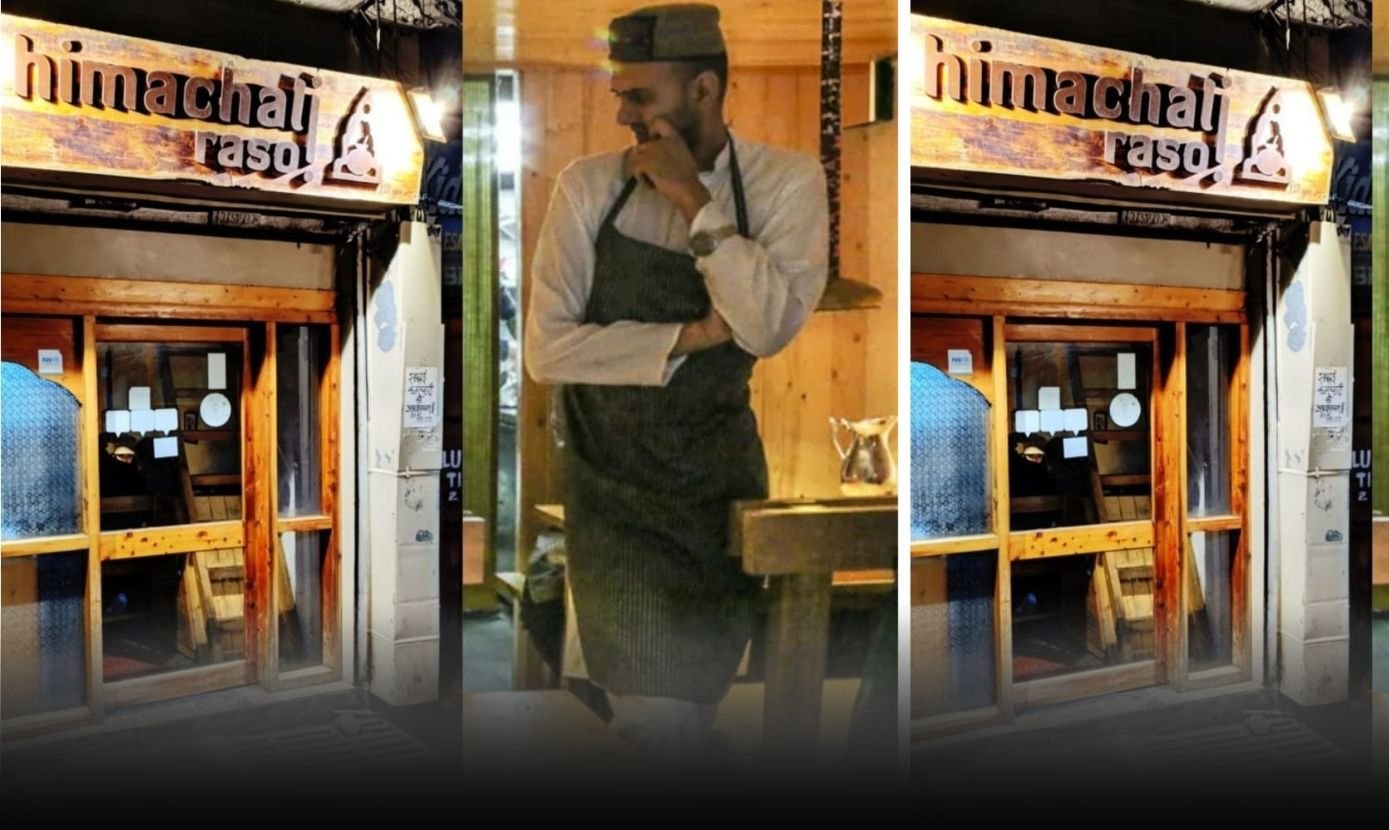
Choosing Tradition Over a Conventional Career
In a world where professional success is often linked to prestigious jobs and international opportunities, some entrepreneurs choose a different definition of achievement. Himanshu Sud, the founder of Himachali Rasoi in Shimla, is one such example.
In 2009, he faced an important decision. With an engineering degree, a stable job, and the possibility of pursuing a Master’s degree in the United States, he had several promising career options. However, his connection to his home state of Himachal Pradesh encouraged him to explore a path closer to his cultural roots.
Growing up in Kangra, Himanshu was familiar with Dham, a traditional Himachali feast that holds an important place in the region’s social, religious, and cultural life. He saw how changing food preferences and modern dining habits could push such traditions away from everyday life.
This inspired him to explore ways to introduce authentic Himachali cuisine to a wider audience.
From Wake and Bake Cafe to Himachali Rasoi
Himanshu began his entrepreneurial journey by opening Wake and Bake Cafe, one of Shimla’s early cafes. The venture introduced a different dining experience to the town, but he wanted to do something that reflected the region’s own culinary identity.
In 2015, he opened Himachali Rasoi with a clear purpose: to bring traditional Himachali food to the forefront.
Preparing Dham requires more than following a recipe. It involves regional knowledge, careful preparation, and techniques passed down through generations. To understand this process, Himanshu spent months travelling through villages and learning from botis, traditional cooks associated with Himachali feasts.
He observed the preparation of lentils, the use of hand-ground spices and the time and care needed to prepare a traditional meal. This learning helped him understand that preserving a cuisine also means respecting the customs and practices connected to it.
Bringing Himachali Flavours to Modern Diners
Himachali Rasoi focuses on traditional food experiences, including Kangri and Mandyali Dham. By presenting these regional dishes in a restaurant setting, the venture gives visitors and local residents an opportunity to experience the culinary traditions of Himachal Pradesh.
According to the account of his journey, the restaurant welcomes around 100 guests each day. This reflects the interest that authentic regional food can generate when it is presented with care and respect for its origins.
Beyond serving meals, the restaurant helps keep local food knowledge visible. It creates an opportunity for diners to learn about traditional dishes and understand their connection to the region’s history and community life.
Entrepreneurship With a Cultural Purpose
Himanshu Sud’s journey highlights an important aspect of entrepreneurship: a business can serve both customers and a larger cultural purpose.
Traditional cuisines carry memories, local ingredients, cooking methods and community practices. When these traditions receive less attention, the knowledge behind them can also become less visible. Businesses that create space for regional food can help maintain public interest in this heritage.
Himanshu’s decision to build a venture around Himachali cuisine shows how personal interests and cultural connections can become the foundation of a business.
India’s Story celebrates entrepreneurs like Himanshu Sud, whose journeys show how local roots can inspire meaningful ventures.