The popularity of Korean entertainment in India has created interest in more than just K-dramas and K-pop. Korean food is also finding its way into Indian homes. Recognising this growing interest, three young graduates from IIM Ahmedabad decided to turn their observation into a business opportunity. Their venture, Gimi Michi, is now building a growing presence in India’s instant ramen market, with monthly revenue reaching approximately ₹1.7–1.8 crore.
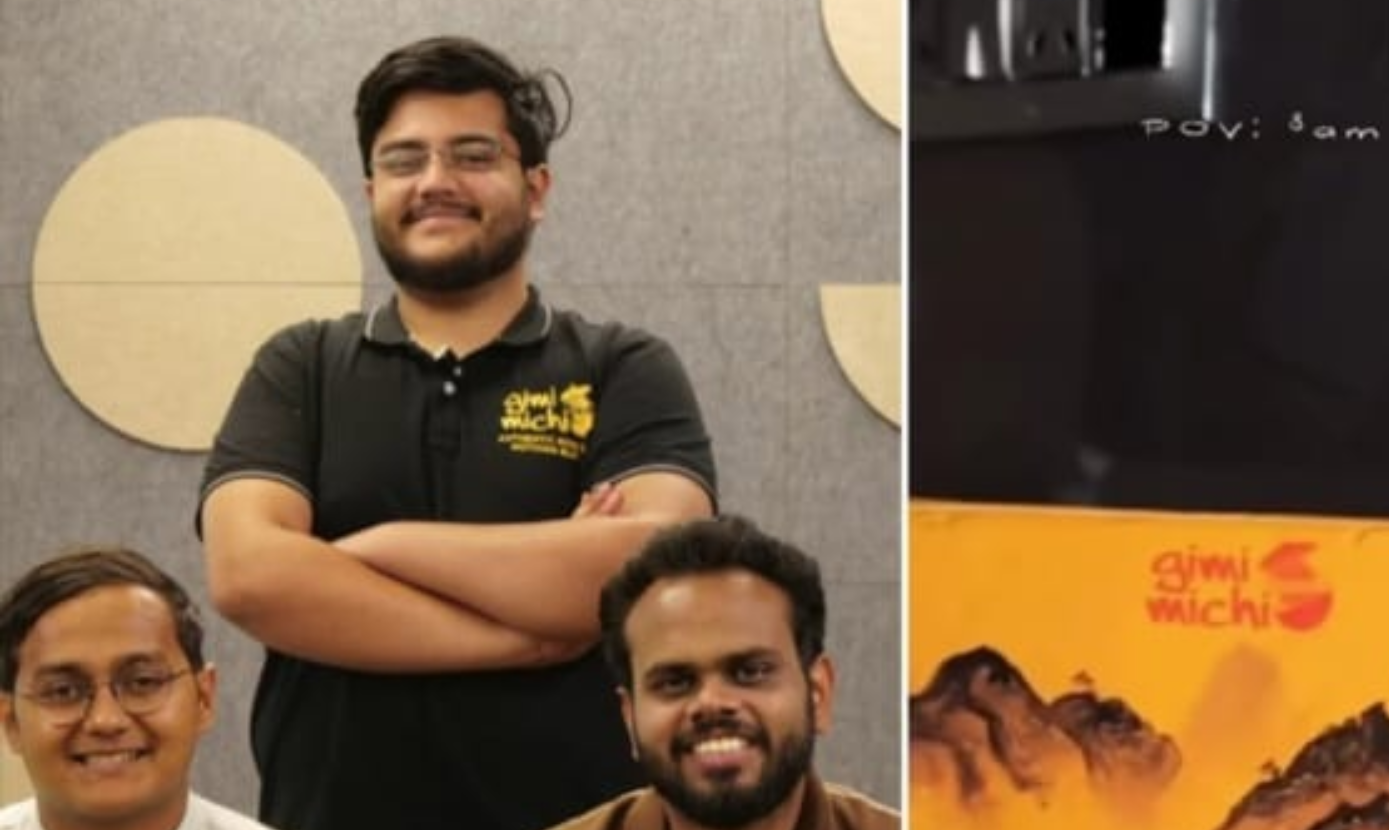
Founded in 2024 and headquartered in Gurugram, Gimi Michi was started by Nishank Goyal, Akhil Kumar, and Bodhi Rathor. The idea took shape when the founders noticed something interesting during their time in Ahmedabad. Korean food, particularly instant noodles, was becoming increasingly popular among young consumers. What began as a small observation soon developed into a business idea.
The company received early support through two grants from IIMA Ventures, which helped the founders begin product development and marketing.
However, turning an idea into a packaged food brand was not easy. Manufacturing became their first major challenge. Producing small quantities at an affordable cost proved difficult, especially when established manufacturers were more interested in working with larger businesses. Eventually, they connected with a manufacturer who was willing to support their early-stage vision.
Developing the right recipe was another challenge. None of the founders came from a food technology background, and hiring an expert was beyond their initial budget. Instead of allowing this limitation to stop them, they used their technical knowledge and an experimental approach.
The team broke down the product into smaller components and tested different combinations. They made repeated adjustments to ingredients and flavours, sometimes changing quantities by just 0.1 or 0.2 per cent. They also consulted seasoning manufacturers, people with experience in the FMCG sector, and experimented with different flavour combinations.
One important decision was to make their ramen feel like a complete meal rather than just another packet of instant noodles. Their product combines noodles with broth and vegetables, offering approximately 8–9 grams of vegetables per pack.
Gimi Michi officially entered the market in April 2025 with its Hot Kimchi ramen. Three months later, it introduced another spicy variant. Over time, the product portfolio expanded to include five ramen flavours, three cup noodle varieties, chilli oil, gochujang paste, and kimchi paste.
Beyond the product itself, the founders also focused on creating a distinct brand identity. Instead of following the usual premium and polished marketing approach, Gimi Michi chose a more playful and unconventional personality to connect with younger consumers.
One of its interesting promotional initiatives was called ‘Ramen Bhandara’. Through this campaign, the team travelled from one college to another and distributed free ramen. The activity helped the brand generate conversations among students and attract attention through social media and press coverage.
The company follows an online-first business model. Its products are available through its own website and platforms such as Amazon, Flipkart, Zepto, Instamart, and Flipkart Minutes. Quick-commerce platforms contribute around 60 per cent of its overall sales, showing how important fast delivery channels have become for the brand.
Today, Gimi Michi has grown beyond its initial startup stage and is generating an estimated ₹1.7–1.8 crore in monthly revenue.
In June 2026, the founders secured a $1 million seed funding round, led by India Quotient, with participation from DevC and Titan Capital. The investment is expected to support the company’s next phase of growth, strengthen its brand presence, and expand its operations.
The founders have a clear ambition: to become India’s leading ramen brand across every major sales platform.
Gimi Michi’s journey highlights how a simple observation, combined with experimentation, persistence, and a strong understanding of young consumers, can develop into a growing consumer brand. The founders did not just introduce another instant noodle product; they set out to create a new experience around Korean-inspired food for Indian customers.