
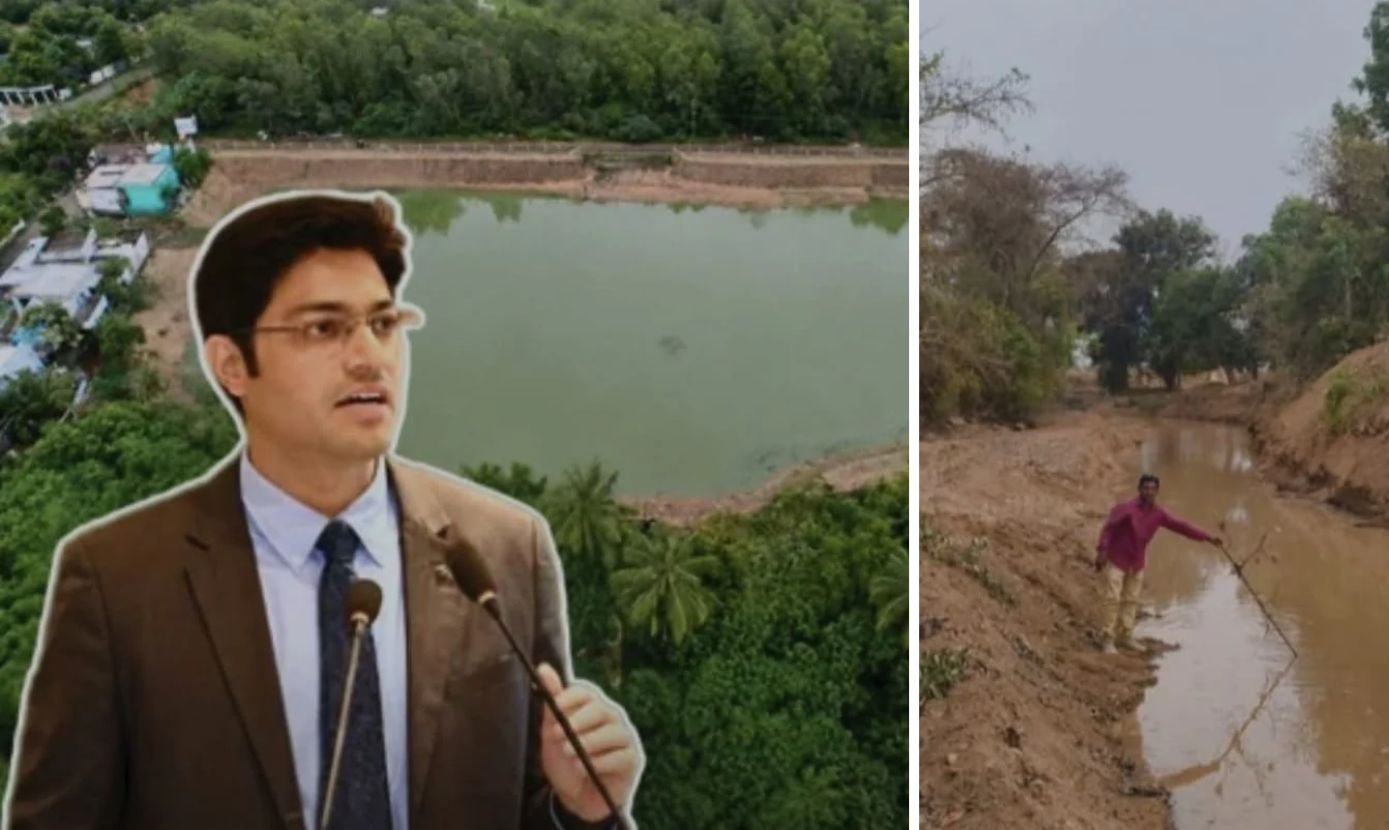
From restoring water bodies to accelerating thousands of conservation projects, IAS officer Avishyant Panda is working to protect Maharashtra’s Gadchiroli district from future water shortages.
Preparing Today for Tomorrow’s Water Challenges
Water is essential for agriculture, daily life and the survival of rural communities. However, changing weather patterns and uncertain monsoon rainfall have made water management an increasingly important challenge across India.
In Maharashtra’s Gadchiroli district, IAS officer Avishyant Panda is taking steps to address this challenge before it develops into a major crisis.
With concerns about El Niño and the possibility of below-normal rainfall, the district administration is focusing on strengthening water conservation infrastructure, improving irrigation facilities and increasing groundwater recharge.
The initiative aims to improve long-term water security for more than 10 lakh residents.
More Than 4,600 Water Conservation Works
One of the major parts of this initiative is the acceleration of over 4,600 water conservation works across Gadchiroli.
These works include constructing check dams, developing farm ponds, creating groundwater recharge facilities and restoring existing water bodies.
The objective is to retain more rainwater locally instead of allowing valuable water resources to flow away unused.
By improving water storage and groundwater levels, the administration hopes to make villages better prepared for periods of limited rainfall.
Strengthening Irrigation for Farmers
Agriculture remains an important source of income for many rural families in Gadchiroli. However, farmers often face difficulties when rainfall is irregular or insufficient.
To address this problem, the district administration is working towards completing more than 1,000 irrigation projects.
These projects are expected to improve access to water for agricultural activities and reduce farmers’ dependence on seasonal rainfall.
Better irrigation facilities could also help farmers protect their crops and maintain agricultural productivity during challenging weather conditions.
Restoring Water Bodies and Increasing Storage Capacity
Alongside developing new infrastructure, the administration is giving attention to restoring existing water resources.
According to the reported initiative, approximately 7.5 lakh cubic metres of silt have been removed from ponds, streams and reservoirs across the district.
Over time, accumulated silt reduces the amount of water these structures can hold. Removing it helps restore their storage capacity and allows them to collect more rainwater.
Such efforts can play an important role in improving local water availability, particularly during the dry season.
Working Closely With Tribal Communities
Beyond infrastructure development, Avishyant Panda’s administrative approach places importance on community participation.
Gadchiroli is home to several tribal communities and local involvement is essential for the success of development initiatives.
Panda has worked closely with tribal residents and gram sabhas to understand their concerns and identify practical solutions.
His approach focuses on listening to communities, understanding their needs and encouraging their participation in development decisions.
This community-focused method aims to make public initiatives more effective and sustainable.
Recognition for Tribal Mobilisation
Avishyant Panda’s efforts in community engagement have also received national recognition.
In 2025, he was honoured with the President’s Award for Tribal Mobilisation, recognising his work involving tribal communities.
The recognition highlights the importance of bringing local people into the development process and making administration more responsive to community needs.
A Model for Long-Term Water Security
Gadchiroli’s water conservation efforts highlight an important lesson for districts facing uncertain rainfall: preparing early can reduce the impact of future water shortages.
Through thousands of conservation works, irrigation projects, restoration activities and community participation, the district administration is working towards a more reliable water supply.
Although the long-term impact will depend on successful implementation and future rainfall conditions, the initiative demonstrates how proactive planning can help communities prepare for environmental challenges.