A Waste Problem That Inspired a Business Idea
India’s textile industry produces enormous amounts of fabric waste every year. Much of this material is discarded, sent to landfills, or burned, creating environmental challenges and wasting resources that could have another use.
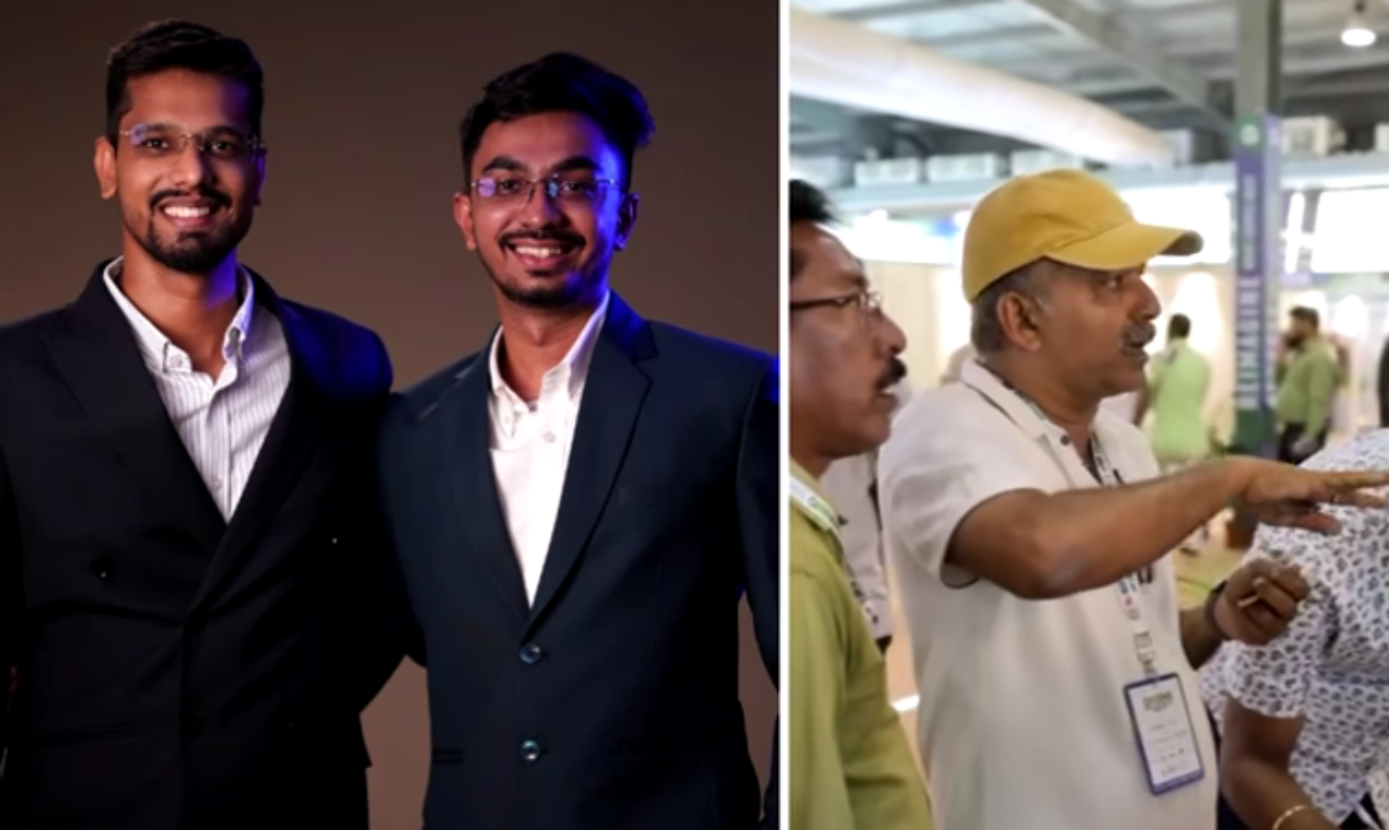
For Laksh Sharma and Deep Sanghani, this problem presented an opportunity to rethink how discarded textiles could be used.
Instead of treating unwanted fabric as useless material, the two entrepreneurs explored whether it could become a durable product for the construction and interiors industries. Their efforts led to the creation of Re-Verse, an Ahmedabad-based startup working to convert textile waste into engineered composite boards.
The company operates through its commercial brand, Weinix, and is developing an alternative to conventional materials such as plywood, medium-density fibreboard (MDF), and certain decorative surfaces.
The idea connects two important needs: reducing waste and finding more sustainable materials for everyday applications.
How Two Founders Came Together
The journey of Re-Verse began in March 2024, when Laksh Sharma and Deep Sanghani met at a startup event in Ahmedabad organised through Gujarat’s innovation ecosystem.
Their backgrounds brought different strengths to the partnership. Sharma had experience related to sustainability and supply chains, while Sanghani was studying mechanical engineering at MNIT Jaipur.
They shared an interest in developing practical solutions using alternative materials.
For Sharma, the issue of textile waste was particularly familiar because of his connection to a textile-industry family. Seeing rejected fabric being thrown away encouraged him to explore whether such material could be given a second life.
The founders began studying the waste-recycling ecosystem, including used-clothing markets in Panipat and Delhi. Their research helped them understand the limitations of existing approaches and the need for products that could meet the durability requirements of the Indian market.
They eventually chose to focus on structural boards rather than products intended only for decoration.
Re-Verse Green Clothing Private Limited was incorporated in June 2024, turning their early research into a formal business.
Turning Discarded Fabric Into Composite Boards
Re-Verse’s core idea is to use textile waste as a raw material for manufacturing engineered boards.
Through its flagship brand Weinix, the company produces boards designed for applications in construction, furniture, interiors, and architectural surfaces.
According to information reported about the business, the boards contain approximately 70% pre-consumer textile waste, combined with around 30% bio-based binders and low-emission resins.
The manufacturing process involves shredding discarded textiles into fibres and using thermal compression to form solid panels.
The finished boards are designed to provide an alternative to conventional wood-based products. Depending on the application and required specifications, they may be used for furniture components, interior panels, and other building-related purposes.
The company reports that its product range includes features such as resistance to termites, stains, fire, and water. Actual performance depends on the product specification and relevant testing.
Manufacturing materials from waste is not simply a matter of pressing discarded fabric together. The final product must meet practical requirements related to strength, consistency, and safety. Developing a material that can compete with established construction products is therefore an important part of Re-Verse’s approach.
Building a Business Despite Investor Rejections
Developing a new material is one challenge. Convincing the market to adopt it is another.
Re-Verse’s founders reportedly faced rejection from 75 investors while trying to secure support for their idea. One of the main challenges was demonstrating that textile-based boards could provide the performance required for structural and interior applications.
For investors accustomed to conventional manufacturing models, a product made largely from discarded clothing presented an unfamiliar proposition.
The founders continued working on product development and business validation instead of abandoning the concept.
According to the reported funding details, the company initially raised ₹65 lakh from friends and family at a valuation of ₹10 crore. It later secured an institutional seed round of ₹9.5 crore, taking its total reported capital raised to more than ₹10 crore.
In 2026, the company also established a joint venture with Taiwan-based WYNIST, combining Re-Verse’s local waste collection and supply-chain capabilities with its partner’s technical expertise.
The partnership was intended to support further product development, manufacturing capabilities, and international expansion.
The experience highlights a wider challenge for sustainability entrepreneurs: an environmentally useful idea must also demonstrate product quality, a clear market, and a viable commercial model.
From Product Development to Commercial Sales
Re-Verse began commercial sales in November 2025, adopting a business-to-business (B2B) distribution model.
Rather than relying only on direct consumer sales, the company targeted wholesalers and distributors working in the hardware, timber, and building-material markets.
Its early customer acquisition efforts included direct demonstrations and product stress tests. These activities helped introduce buyers to a material that differs from traditional wood-based boards.
According to the published report, Re-Verse had built a network of approximately 30 primary B2B distributors across India.
The company’s reported revenue reached ₹4.5 crore in financial year 2025–26. This marks an important commercial milestone for a business operating in the specialised field of sustainable construction materials.
The company also works on services related to Extended Producer Responsibility (EPR) compliance and environmental, social, and governance (ESG) tracking for apparel brands. Such services can help businesses understand and manage aspects of their environmental responsibilities.
These activities give Re-Verse a business model that extends beyond selling boards. It also connects textile waste management with the needs of manufacturers and other organisations seeking more circular material solutions.
The Environmental Potential of Textile Recycling
The environmental case for Re-Verse lies in keeping usable material in circulation for longer.
When textile waste becomes a raw material for a new product, it can reduce the amount of discarded fabric sent to landfills or incinerators. If the resulting boards replace conventional timber-based products in suitable applications, they may also help reduce demand for virgin resources.
However, the overall environmental benefit depends on several factors, including manufacturing energy, transportation, product life, recyclability, and the materials being replaced.
Re-Verse has stated that its process aims to divert textile waste from landfills and incineration. The company has also outlined projections of saving more than one million trees annually and avoiding approximately 22,000 metric tonnes of carbon dioxide emissions at its targeted production scale.
These figures are future production-scale projections, not evidence of impact already achieved. Their actual results will depend on how much material the company produces and how effectively its products replace conventional alternatives.
Even with these considerations, the underlying approach offers a promising example of how industrial waste can become a resource for another industry.
What’s Next for Re-Verse?
Re-Verse is looking beyond the Indian market as it develops its manufacturing and distribution network.
The company has reported exports to European markets, including Germany, and plans to explore further opportunities in North America and the Middle East.
Its stated expansion goals include increasing monthly production capacity from 1.2 lakh square feet to 10 lakh square feet over the next 12 to 24 months, alongside an ambition to exceed ₹100 crore in annual revenue.
The founders have also expressed a long-term ambition to take the company public within five years.
These are company targets rather than guaranteed outcomes. Achieving them will require continued investment, reliable access to textile waste, consistent product quality, and growing demand from distributors and industrial customers.
The next phase of growth will depend on whether Re-Verse can scale its production while maintaining the performance and environmental benefits that form the basis of its business.
A Different Way to Think About Waste
Re-Verse’s journey demonstrates how entrepreneurs can look at a familiar environmental problem from a new commercial perspective.
Discarded fabric is usually considered the end of a product’s useful life. By converting textile waste into engineered boards, the company is attempting to create another stage in that material’s journey.
Its experience also shows that sustainability-focused businesses must solve more than an environmental problem. They need products that customers trust, manufacturing processes that work at scale, and distribution networks that make commercial growth possible.
For Laksh Sharma and Deep Sanghani, the larger opportunity lies in connecting waste management with the demand for alternative building materials.
As India continues to explore ways to use resources more efficiently, businesses that combine industrial innovation with practical market needs could play an important role in developing a more circular economy.
Re-Verse is one example of this emerging approach, showing how an overlooked waste stream can become the starting point for a new manufacturing opportunity.